AI Growth Hacking Weekly — EP#56: Xiaohongshu's Four-Year AI Journey, Hao Jingfang's Founder Interview, Inside Notion Agent, AI Desk Pets, Stock Factor Skill, County Town AI Shops, and more
Shift from pursuing "how much can I do' to pursuing 'how much can I let go".

1/ Had dinner with an old classmate in town for business. He’s been working in stage design for the entertainment industry all these years—everything from peak-era variety shows and concerts to the idol audition shows and talk shows you still hear about today. Three hours of celebrity gossip and some surprising insights about my favorite Hong Kong actors. A small shock to the system, but not entirely unexpected.
We also talked about AI’s sweeping impact across industries. He hasn’t been affected yet—he can take it all in stride. I think it’s mainly because his work requires on-site visits to venues, coordination between celebrity agents, event organizers, and platform executives, and the unglamorous task of implementing whatever ridiculous plan the boss just signed off on.
Work that demands hands-on control of the physical world, delivering both material and emotional value to upstream stakeholders—these are the roles that won’t be replaced by AI anytime soon. In the lipstick economy era, the top entertainment coordination firms are actually seeing more business, not less. What’s more exposed are the downstream execution shops: editing, visual packaging, materials production.
He complained plenty about the stupid decisions made by clients and platform bosses. But I told him: a good chunk of what he’s earning is exactly this “humble fees” for tolerating nonsense.
2/ Ad break: I’ve partnered with an old classmate who’s been in overseas education and arts education for years to organize a Hong Kong University of Science and Technology AI Research Academic Camp this summer.
We’ve secured HKUST authorization and resources—campus lab tours, AI lab visits, professor-led methodology training, and mentorship from industry professionals. The goal: help applicants build high-quality academic materials they can actually use in their CVs and personal statements.
Six days this summer. Ideal for undergrads (especially sophomores through seniors), grad school applicants targeting Hong Kong or overseas programs, young professionals looking to strengthen their academic and career narratives, and parents wanting to expand their kids’ horizons.
The camp costs 24,800 RMB per person. Friends finding us through this Newsletter get an early bird price of 22,800 RMB before May 31. For parent-child pairs (one adult + one child), it’s just 4,000 RMB extra on the original price—22,800 + 4,000 = 26,800 RMB early bird.
Interested? Add my WeChat to get the full details: ifanbing (please mention “HKU camp” when adding).
CASE Studies
Xiaohongshu’s Four-Year AI Transformation Journey—Will It Finally Work This Time?
via Xiao Sijia

For years, Xiaohongshu has held an enviable community asset base and advertising foundation. They’ve tried e-commerce, live streaming, and more to unlock new growth—yet never quite broken through to the next level.
Their AI exploration has been at it for four years, still without a clear path. The root cause? Xiaohongshu has been wavering between “authentic human feel” and AI algorithms.
On April 30, they launched “Dots,” an AI-level department upgraded from the former Humanities Intelligence Lab (Hi Lab), with four subdivisions: model R&D, infrastructure, engineering, and product.
This article traces their four-year AI journey from that inflection point—setbacks and breakthroughs included. For instance: in 2025, the AI “Ask Anything” feature boosted community user retention by approximately 2%–3%.
Whether they can integrate resources and clarify AI’s role in the community remains to be seen. Worth watching. Their experience is both a cautionary tale and a live case study for any enterprise exploring AI transformation.
A 300,000 Pixel “AI Desk Pet” Is Selling Like Hotcakes—Here’s Why
via Discovered Tomorrow’s Products
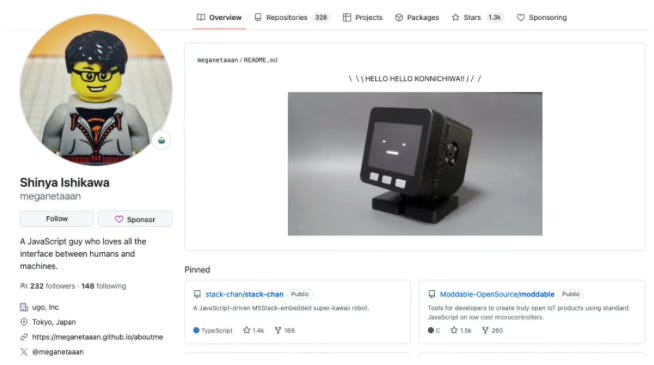
Alongside the CLI renaissance comes the low-resolution mosaic monitor—toss in some AI texture rendering and you’ve got yourself a trendy “AI desktop companion.”
Rather than the high-def images on your phone screen, these tangible little desktop trinkets hit users’ need for emotional value and a sense of interaction.
I enjoy scrolling similar content on Xiaohongshu myself, seeing what creative things people have built. In private conversations with product developers, I’ve heard they’re considering how to output their own status attributes in desk pet-compatible formats. Go play with it, everyone.
Notion Agent Shipped One Year Late—Now It’s the Highest-Converting Paid Feature
via Simon La
Notion’s Custom Agents went through five rebuilds, delayed a full year—and somehow became Notion’s highest-converting Free Trial feature ever. How?
On the Latent Space podcast, Notion’s AI Engineering Lead Simon Last and AI Product Lead Sarah Sachs shared some inside practices and key insights:
Early on, the team tried forcing models to adapt to Notion’s custom XML and JSON formats. Complete failure. Switching to Markdown and SQL—formats models handle naturally—brought immediate quality gains.
When tool counts exceeded 100, the team adopted a “progressive disclosure” approach, dynamically showing tools to avoid system collapse.
Inside Notion, there’s a GTM team that built over 30 Custom Agents, each handling specific tasks: some research customer info, some categorize feedback, some handle data entry. Problem: these 30 agents generated 70+ “blocked” notifications daily, all pushed to one person—way more than anyone can process. So they added a Manager Agent. This agent monitors the other 30, aggregates and analyzes blocks when they occur, attempts automatic resolution, and only escalates the handful requiring genuine human judgment. Notifications dropped from 70 to 5.
A new role is emerging at Notion: “Model Behavior Engineer.” No engineering background required—but potentially the core job of the AI era.
Trump and Justin Sun Are Now AI Scalpers—How Deep Does This Rabbit Hole Go?
via APPSO
The Triangle Trade model is repeating itself in AI.
OpenAI and others blocking mainland China IPs and restricting payment access gave rise to a gray middle layer—the “AI relay stations.” These operate on the open-source One API project, commercializing through protocol standardization, token fee interception, and multi-account rotation pools.
Upstream resource providers cut costs using free cloud credits, educational email discounts, even stolen credit cards. Recent expansion: recruiting locals in Africa for facial data collection to bypass real-name authentication.
But 45.83% of nodes aren’t running the models they claim—accuracy lags official APIs by 40+ percentage points on medical and legal tests. Another ACM paper revealed some gateways charge 62.8% more than expected, with no way for users to know.
Paying premium for “top-tier” AI service? You might be getting something completely different at a random price.
Opinion
A Conversation with Hao Jingfang: From Beijing Folding to AI Folding
via Ms. Jia
What’s the gap from Hugo Award winner to solo company founder?
After winning the Hugo in 2016, Hao Jingfang founded Tongxing Academy. Now she codes with AI Agents and spins off companies herself.
In a podcast interview with JiaZiguang, she said something that stuck with me: the communication between AI product managers and coding models is “completely smooth, seamless”—human intervention actually hinders efficiency. So she chose “full AI work,” developing her entire education system with AI.
On organizational management, her aversion to hierarchy-driven internal friction led her to split Tongxing Academy from 50-60 people into 9 smaller companies. HQ’s full-time headcount: 0. All revenue comes from profit sharing with subsidiaries.
She believes companies don’t need to “grow bigger and stronger”—they need to “multiply and beautify.”
The core insight: AI truly enables one person to become an entire team.
The 0.02% Survivor: When Building an App Is Easier Than Getting a Dinner Reservation, What Becomes Valuable?
via Uncle Rust
Eli Cohen summarized an counterintuitive conclusion after his 2010 startup failure: ideas are worthless, execution is everything. The most valuable part of this article comes after the thesis—several todo suggestions:
The first shift: from pursuing “what you can do” to pursuing “what you can give up.” AI lets you do everything. It’s precisely because you can do anything that you must practice what not to do. Taste isn’t about more choices—it’s about more rejections.
The second shift: from the information end to the judgment end. AI can give all the answers. What’s valuable is knowing what to ask, and when to distrust the smooth-sounding answer AI hands you. I’ve talked about deskilling before: if someone’s never completed a task without AI, they’ll never know what’s missing from AI’s output.
The third shift: from skill accumulation to narrative accumulation. Skills get commoditized. But a living person’s judgment trajectory can’t be replicated. The line between what someone believed three years ago and what they believe now—that’s identifiable. AI has no continuous self, no real stance evolution.
The fourth shift: from “creating content” to “building positions.” See every output as asset accumulation, not a one-time catch. Every article you write, every product you build—are you hawking them individually, or stacking weight in the same direction?
The fifth shift: from being a builder to being a builder of rooms. You’re not just making products—you’re creating a space where people like you can find each other, recognize themselves, and stay.
Talking AI Implementation with a Veteran Bureaucrat: Why Are State Enterprises So Obsessed with “Knowledge Bases”?
via Looking at Mount Sumeru from a Mustard Seed
Why do state enterprises and SOEs focus almost exclusively on “knowledge bases” for AI?
After reading this dialogue with an institutional “old-timer,” I finally understood: it’s not technological lag—it’s the risk-averse instincts of the “hierarchical bureaucratic system.”
A note: this article is marked as fiction at the end. Don’t take it as gospel. Whether such a dialogue actually happened is unknown, but much of the logic is self-consistent, and it filled some blind spots in my perspective. So I’m sharing it—you be the judge.
The article mentions that for SOE executors, AI projects must satisfy three demands: “absolute safety,” “visible achievements,” and “solving real pain points.” Knowledge bases fit all three perfectly—fully isolated from high-risk production, controllable risk; managing massive regulations and official documents, catering to “leave traces on everything” compliance needs; and “reducing burden” for the writers drafting materials.
Quick Reads:
“AI Shops Are Popping Up in County Towns—Are the Bosses Actually Making Money?” County towns in China are seeing countless AI-branded shops—AI self-study rooms, AI noodle shops, AI car washes. But the AI content is minimal: self-study rooms just have kids using Pads to answer questions, KTVs generate absurd AI MV videos, car washes are really just fixed-trajectory computer-controlled car washes. Customers aren’t buying it—some even say the branding made the food worse. The money isn’t coming from customers. Where is it coming from? Two paths: first, franchising chains to collect franchise fees and equipment markups. AI self-study rooms grew from 1,320 to 50,000 in two years, brands using standardized pitches and model stores to attract franchisees. A retired teacher in Jinan invested 190,000 RMB then went bust; used learning machines flood resale platforms at low prices. Second, tech companies stuff ready-made LLM APIs into hardware, repackaging them as industry solutions sold to shop owners at high prices.
“An AI Agent Runs This Experimental Swedish Cafe. Here’s How It’s Going” US startup Andon Labs opened an experimental cafe in Stockholm where AI agent “Mona” handles nearly all business decisions—human baristas only make and serve coffee. As of mid-May, sales exceeded $5,700, but of the original $21,000 budget, nearly $5,000 has been consumed, mostly in one-time equipment costs. Customers can talk to the AI directly by phone in-store—most find it novel and fun.
“Tech Giants’ Employment Ledger: 1.3 Million People, Hundreds of Billions in Salaries—Where Did It All Go?” China’s internet giants are undergoing a major resource redistribution from “people” to “machines.” Analyzing 2025 annual reports from ten companies including Tencent and Alibaba reveals three employment logics: JD.com trades scale for market, with 776,000 total employees; Alibaba and Baidu are trimming and focusing on R&D; Tencent and Pinduoduo are carefully selective, adding almost exclusively tech roles. Pay distribution is polarized: Tencent’s average annual salary is 1.13 million RMB, while JD.com’s is only ~170,000 RMB due to over 80% frontline delivery and warehouse workers. More striking is the R&D gap—Tencent alone spends 85.75 billion RMB in R&D, exceeding Meituan, NetEase, Kuaishou, and Trip.com combined. Companies doubling down on AI—Alibaba, Baidu, NetEase—are seeing stock prices rise, while delivery-heavy companies like Meituan and JD.com face pressure. The market is reassessing internet company growth models, shifting from pure scale expansion to systems, algorithms, and organizational efficiency.
Tutorials & Resources for Individuals:
“Making Meaning Emerge: Your Memory, Your memory.md” Note-taking tool flomo launched a new feature: AI compresses, summarizes, and distills all your notes into two documents about you—”The Stable You” (user.md) and “The Current You” (memory.md). Put either into any AI and you can: first, personify conflicting internal personas like “Truth Seeker,” “Creator,” “Operator,” “Stoic,” “Anxious One”; second, present significant memory slices, showing your hidden “default values”; third, when connected via MCP or personalized settings, the AI assists in making better decisions.
“For Beginners: 100K RMB to Do Amazon, How Sellers MCP + Claude Helped Me Pick a Product” Instead of using crawlers, Python and other technical showing-off methods for product selection, let AI call real Amazon data for analysis. Sellers MCP does exactly this. The author tested it by inputting “newbie, 100K budget, 10 daily sales, can profit”—Claude called DeepSeek-v4-flash, the whole process cost just 1.66 RMB, and selected a multi-blade vegetable chopper.
“I Built a Skill from Investment Research to Stock Factors Using Codex (Open Source)” After building a local stock database, the next step in quantitative research is factor development. Traditional methods require researchers to manually read reports, extract factor definitions, translate to code, and repeatedly verify—low efficiency, high repetition. The author first tried RDAgent, which extracts abstracts from PDFs, generates factor formulas, calls Qlib environment to write code and auto-verify, but the installation is complex, requires Docker and unfavorable network conditions. So the author turned to Codex—inputting report content, generating factor code directly, and successfully packaging the whole process as an open-source Skill.
“5 Ultra-Practical Claude Code + Feishu Agent Office Hacks” Feishu CLI has opened nearly 120 capabilities—almost can do anything. The article shares 5 internal combat cases: first, building a cross-session knowledge base for each meeting series, where agents automatically capture meeting data and generate structured documents; second, agents + Feishu for comprehensive work retrospectives, pulling data from 8 channels including DMs, group chats, meetings, and tasks to generate full reports, even catching project schedule omissions; third, automating repetitive coordination workflows—handing blogger reconciliation to Feishu bots that automatically check tables, verify, and route issues (notify Biz Dev if amounts don’t match, notify Finance if orders are missing), with the whole development process requiring just voice input.
“Doubao Input Method Mac Version Launches—Everyone Should Try AI Voice Input” Free, with recognition accuracy and filler-word removal outperforming comparable products like WeChat Input Method. Usage is simple: set a hotkey, hold to talk, release to complete voice-to-text, supporting streaming output.
“After Installing This AI Hot Topics Skill, You’ll Never Need to Scroll AI News Again” Author Digital Life Kazek opened three access methods—Skill, RSS, and API—after making their AIHOT website publicly free and receiving massive positive feedback. AIHOT Skill’s four core capabilities: first, auto-generate daily AI briefings organized by five sections including model releases and product updates; second, curated mode, presenting all noteworthy high-quality entries in a timeline, suitable for those who don’t want to miss anything but don’t want full data dumps; third, time window and category queries, filtering from full data with curated info as default response; fourth, keyword search, supporting queries like “What did OpenAI release recently.”
“GPT Image 2’s Most Underrated Hidden Feature: Complete Brand Visual Proposals!” With GPT-Image 2’s paid version, anyone can quickly generate a complete brand visual proposal—no design team or professional software required. Core method: input brand materials into GPT, AI automatically extracts brand DNA and generates 5 core images: main visual cover, recognition system (logo, colors, etc.), product packaging, communication scenarios, and IP character design. This workflow mimics professional designer logic, forming a complete chain from concept to product to communication.
“Let Creators Get Rich First” AI era high-quality skill supply needs a complete pricing, protection, and incentive mechanism, not relying on free or open-source spirit. YouMind launched its Skill Creator Incentive Plan on May 1: creators set their own prices with platform taking small cut; plagiarism check mechanism with option to hide skill details, preserving creator recourse rights; dual-channel incentives for point-to-reward or platform bonus exchanges; direct buyer feedback comments, with plans for creator-specific agents enabling direct creator-user dialogue; building a vertical skill market for creators. After launch, a large number of privately-held high-quality skills became public and priced—one AI coach broke 100 USD daily bonus, exceeding 1,000 USD cumulatively. These creators aren’t traditional influencers—they’re knowledge workers packaging professional judgment, workflows, or problem decomposition into executable, reusable skills.
“Master CC, Work Twice as Fast! Claude Code Command Guide, Gold Commands, Multi-Model Config, Practice Guide, Hooks and Pitfall Records” The article covers four major sections: command guide covering CLI commands, slash commands, shortcuts, and multi-model config (connecting to Zhipu GLM, DeepSeek, and other domestic models via environment variables or config files); handpicked high-frequency gold commands, emphasizing how to chain commands into engineering workflows; pitfall records sharing the author’s firsthand experience; best practices combining commands with Skills + MCP ecosystem.